Urban Patrol Script

Application: VBS2 ArmA VBS1 OFP
Download Link: 2.0.0
Last Update: • No more server Game Logic needed
• No more initialization needed
• Patrol can be started only after spotting an enemy
• Pursuit movements can be restricted to patrol area
• Areas can be considered cleared if a minimum number of units is left
• Dead units can be removed after a certain time
2.0.1
Last Update: • Spawned units will default to limited speed
• No more server Game Logic needed
• No more initialization needed
• Patrol can be started only after spotting an enemy
• Pursuit movements can be restricted to patrol area
• Areas can be considered cleared if a minimum number of units is left
• Dead units can be removed after a certain time
1.0.1 1.0
Forum Thread: - flashpoint1985.com vbsresources.com -


Allows easy creation of randomly patrolling units, with improved AI behaviour.

Setting up a scenario with this script requires only three basic steps:
  1. Put in your player's unit/group.
  2. Create a marker that covers the active area (this is where the AI will patrol).
  3. Place one or more enemy units (or groups) on the map that call the patrol script.
  4. And that's it...
Here's a quick walkthrough for setting up a basic mission:


Some of the features and advanced customization options that are available:

Setup Options

AI Behaviour

Intel Options


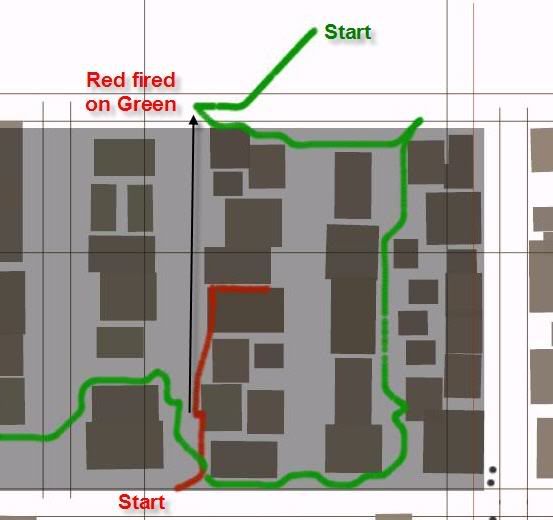
Examples of what the patrolling paths of the units look like, and how the improved AI behaviour works.
A car (green) and infantry unit (blue) patrolling Paraiso for about 15 minutes:


AI behaviour after enemy encounter (green path, notice flanking move) :


Setup in Editor
One AI unit (which will be cloned into random positions a few times), the player, and the area marker.
In-game, after about a minute.
The red paths indicate the AI movement.
Player is a sniper in the North. After firing at the AI for a few times, he is then approached via various flanking paths.


Another example of a flanking approach by an AI unit, after being fired at with a silenced gun.
Notice the use of cover during the approach.


[back to main page]